Welcome to a new column, Gazette readers. If you’re like me and want a great yard and garden but don’t have endless time and funds to sink into the dirt, this is the space for you!
In Dig This!, I’ll share what I’ve learned as a lifelong grower and gardener, and specifically what works (and doesn’t work) for growing in DC. My goal is to help others avoid the mistakes I made. By following my advice, you can save money and time and make growing your DC garden easier, more successful, less expensive, and a lot more fun!
For Starters. When we bought our Glover Park home 15 years ago, we were charmed by the well-established trees and the abundant planting space. We naively thought we could easily stick in some plants, grow a lawn, and live happily ever after. As it turned out, though, we’d inherited a yard dominated by English ivy and other invasive plant species. That was just the first of many gardening blunders. Subsequent ones included:
• Spending hundreds (maybe thousands?) of dollars on plants that ended up dying;
• Digging, ripping out, and cutting off what I thought were “weeds” only to find out later they were valuable plants
• Buying bags of compost, mulch, soil amendments, and other products to break up clay or add richness • Pumping copious amounts of water onto plants, trying to help them survive the DC heat
• Planting some things that I later learned were invasive and then laboring to rid the garden of them so that my other plants wouldn’t be overtaken, and
• Losing precious time nurturing plants not acclimated to our region, only to repeat the same cycle with different plants.
Wiser Now. I’m always learning and still don’t have the time I would like to spend in my yard and garden. But I’m no longer wasting energy and money trying to force a plant intended for the cool summers of New England to grow here in our beautiful but sweltering city. I used to think of myself as a lazy gardener, but, really, I am an over-scheduled gardener with ambitions greater than my resources. And that describes many homeowners and gardeners I know!
Each month I’ll highlight a plant solution, focusing on replacing a problem plant, getting things to grow in a tough spot, introducing a nice versatile plant, or answering a question from a Gazette reader.
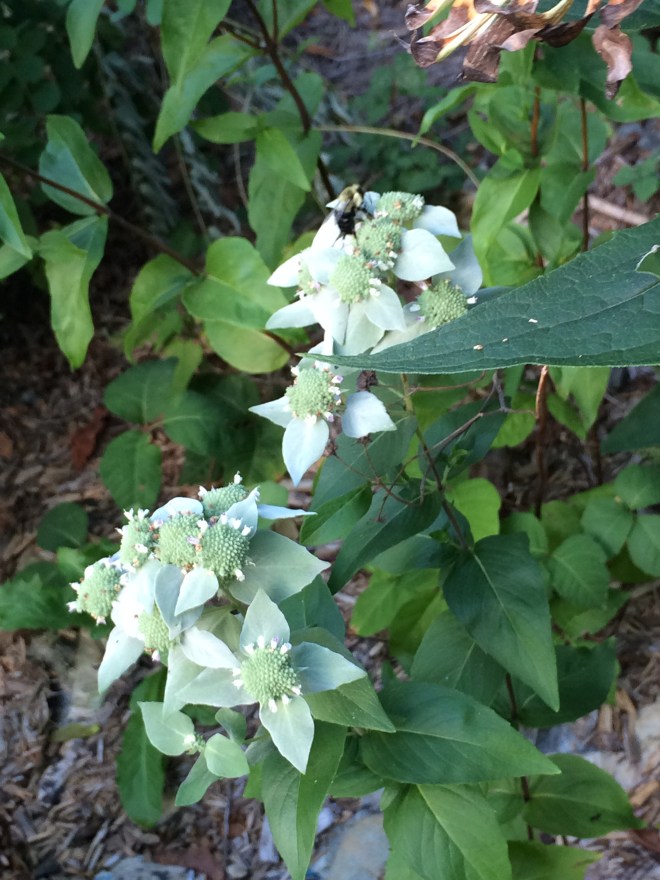
Until then, let me mention that next month’s issue will detail how, after years of frustration over the hideous weedy eyesore beside our driveway, we turned the plot into a bird- and bug-sustaining “pollinator pathway” replete with plants like Joe Pye weed, mountain mint, and goldenrod. I’ll relay the full story of that pathway and provide tips for creating your own.
I’d also love to hear about challenges you’ve faced, solutions you’ve found, and even specific questions you may have about certain plants. You can email me at GloverDigThis@gmail.com.
(this article originally appeared in the Glover Park Gazette, September 2017)
 StephShain